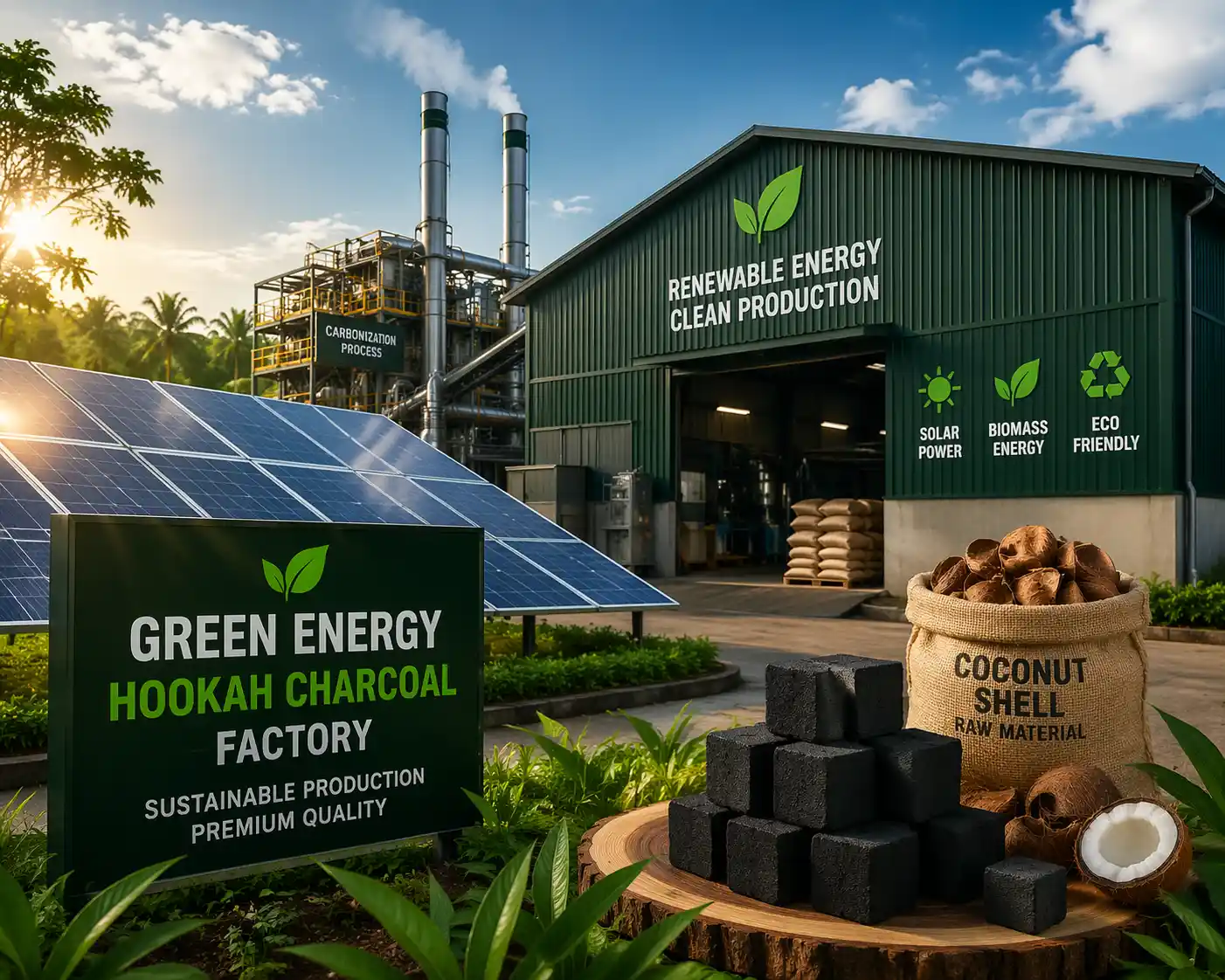
Green Energy Hookah Charcoal Factory
The global shift toward sustainability is influencing every industry, including the hookah market. A green energy hookah charcoal factory is becoming a key solution for businesses that want to reduce environmental impact while maintaining high production standards. As consumers grow more aware of eco-friendly practices, manufacturers are under pressure to adopt cleaner and more responsible methods.
By integrating renewable energy sources and sustainable raw materials, these factories are setting new standards in charcoal production. Companies that embrace this innovation not only contribute to environmental preservation but also strengthen their position in a competitive market.
What Is a Green Energy Hookah Charcoal Factory?
A green energy facility for hookah charcoal production uses renewable energy such as solar power, biomass, or other sustainable resources. Unlike traditional factories that depend on fossil fuels, these facilities focus on reducing emissions and conserving energy.
Most of these factories also use natural raw materials like coconut shells, which are widely recognized for producing high-quality charcoal. This combination of renewable energy and sustainable resources ensures a cleaner production process from start to finish.
Advantages of Green Energy in Charcoal Production
Reduced environmental impact
Factories powered by renewable energy significantly lower carbon emissions and help reduce pollution. This approach supports global efforts to fight climate change while maintaining industrial productivity.
Long-term cost efficiency
Although the initial investment in green technology can be higher, operational costs decrease over time due to energy savings and improved efficiency.
Improved charcoal quality
Eco-friendly production methods often produce charcoal that burns longer, generates less ash, and provides a cleaner smoking experience. This is especially important for customers looking for premium Shisha charcoal.
Stronger brand positioning
Companies that operate a green energy hookah charcoal factory can appeal to environmentally conscious consumers and build a more trustworthy brand image in international markets.
Production Process in a Green Energy Hookah Charcoal Factory
The process begins with collecting sustainable raw materials such as coconut shells, which are a byproduct of the agricultural industry. These materials are carbonized using energy-efficient systems powered by renewable energy sources.
After carbonization, the charcoal is crushed into fine powder and mixed with natural binders. It is then compressed into uniform shapes, such as cubes or hexagonal pieces, depending on market demand. The drying stage also uses renewable energy, further reducing environmental impact.
Finally, the finished charcoal is carefully packaged using eco-friendly materials before being distributed globally. Companies that follow these processes often highlight their sustainability practices on their official platforms, such as indobriquettescharcoal.com to attract potential buyers.
Why Businesses Should Invest in Sustainable Charcoal Production
Investing in a green energy hookah charcoal factory is a strategic move for long-term growth. Governments around the world are introducing stricter environmental regulations, making sustainable production more important than ever.
In addition, consumers are increasingly choosing products that align with their values. Businesses that adopt green practices can expand their reach, improve customer loyalty, and stay ahead of competitors in the global market.
Conclusion
A green energy hookah charcoal factory represents the future of the hookah industry. By combining renewable energy with sustainable materials, manufacturers can produce high-quality charcoal while minimizing environmental impact. This approach not only supports a healthier planet but also creates new opportunities for businesses aiming to grow in an eco-conscious world.