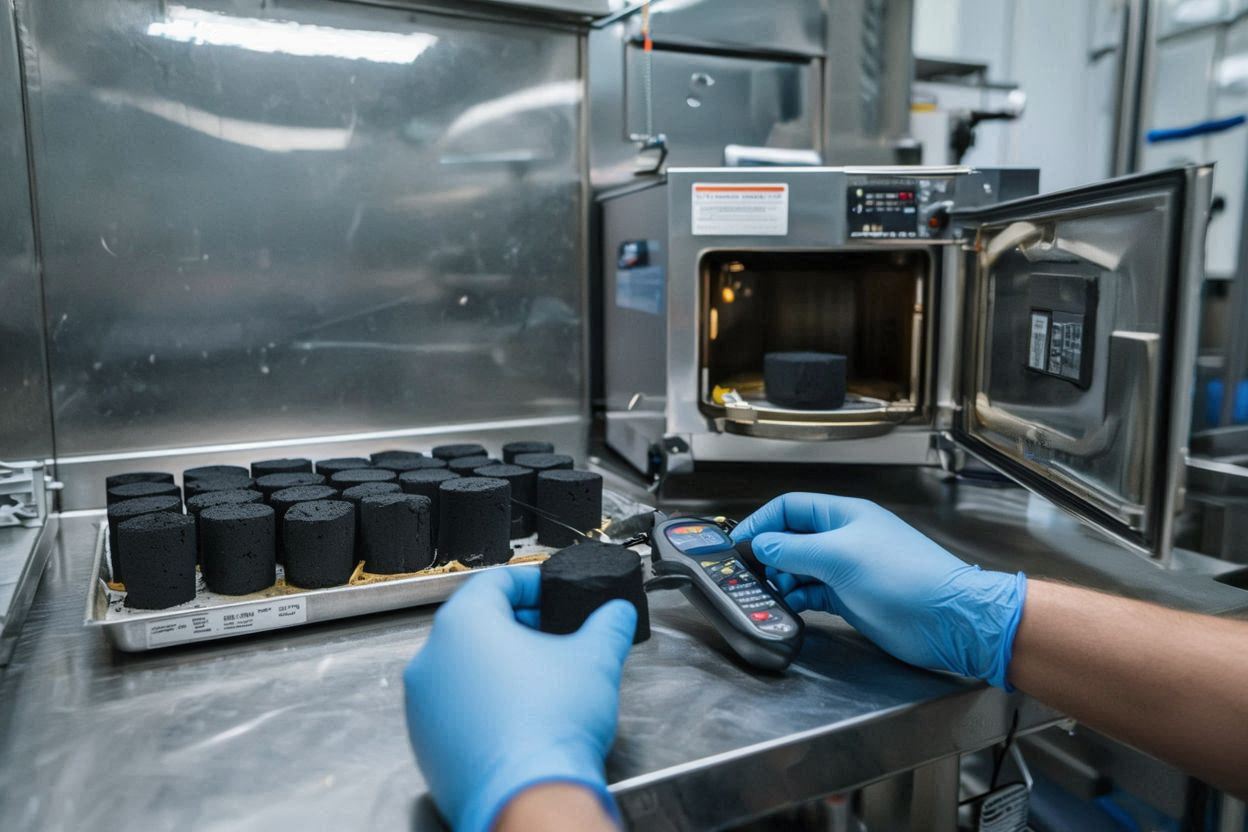
Moisture Content In Hookah Charcoal Production
Moisture Content In Hookah Charcoal is one of the most important factors that determines how well charcoal performs during ignition, burning stability, and smoke quality. If the moisture level is not controlled properly, even high-quality coconut shells will produce weak briquettes with poor combustion. Because of this, manufacturers treat moisture control as a core part of production, not just an additional step.
In hookah charcoal manufacturing, moisture appears from raw materials, binders, environmental humidity, and storage conditions. Each source must be managed carefully to ensure the final product stays consistent and performs well in real hookah use.
Raw Coconut Shell Moisture Impact
The production process begins with coconut shells that naturally contain water. Fresh shells often hold high moisture, especially in tropical climates. If producers skip proper drying, this water will carry into later stages and reduce carbon efficiency.
Before carbonization, shells must be dried to lower Moisture Content In Hookah Charcoal at the earliest stage. This step helps stabilize heat reaction and ensures smoother carbon formation inside the furnace.
Moisture Behavior During Carbonization
During carbonization, heat removes remaining water and volatile compounds from coconut shells. If moisture is too high, energy is wasted on evaporation instead of carbon formation. This leads to weak carbon structure and inconsistent briquette performance.
Controlled heating allows moisture to escape gradually. This prevents internal pressure buildup that could damage the charcoal structure. Proper management of Moisture Content In Hookah Charcoal during this stage improves density and burn quality.
Role Of Binders In Moisture Level
Binders like tapioca starch add necessary cohesion but also increase water content in the mixture. If not balanced properly, excess moisture can cause briquettes to shrink or crack during drying.
Manufacturers must carefully calculate binder ratios to maintain stable Moisture Content In Hookah Charcoal while still ensuring strong bonding between particles.
Pressing And Internal Moisture Distribution
When charcoal powder is pressed into briquettes, moisture becomes trapped inside the compact structure. High pressure does not remove water but redistributes it evenly.
If moisture is too high, internal steam may form during drying, causing cracks or weak spots. Proper pre-drying ensures Moisture Content In Hookah Charcoal remains balanced before pressing begins.
Drying Stage For Final Moisture Control
Drying is the most critical stage for controlling moisture. After pressing, briquettes still contain water from binders, production processes. Controlled drying removes this moisture slowly to prevent surface hardening while the inside remains wet.
Factories use low-temperature drying systems with controlled airflow. This ensures stable evaporation, protects structural integrity. At this point, Moisture Content In Hookah Charcoal must reach an optimal level for ignition and long burning performance.
Storage And Environmental Exposure
Even after production, charcoal can absorb moisture from air. High humidity during storage or shipping can reduce performance and increase ignition time.
Producers use sealed packaging and dry storage rooms to protect final products. Maintaining stable Moisture Content In Hookah Charcoal after production ensures consistent quality until it reaches customers.
Quality Problems From Poor Moisture Control
If moisture is not controlled properly, several issues can appear in the final product. These include slow ignition, uneven burning, high ash production, cracking during handling, short burn time.
Conclusion
Moisture Content In Hookah Charcoal plays a major role in determining final product quality, from raw material preparation to final storage. Proper moisture control improves ignition speed, burn stability, overall user experience. Manufacturers who manage moisture carefully achieve stronger and more reliable charcoal.
For consistent raw material standards, producers often rely on coconut charcoal briquette suplier to maintain stable production quality. You can also explore jacoid.com for deeper insights into coconut charcoal manufacturing and industry practices.