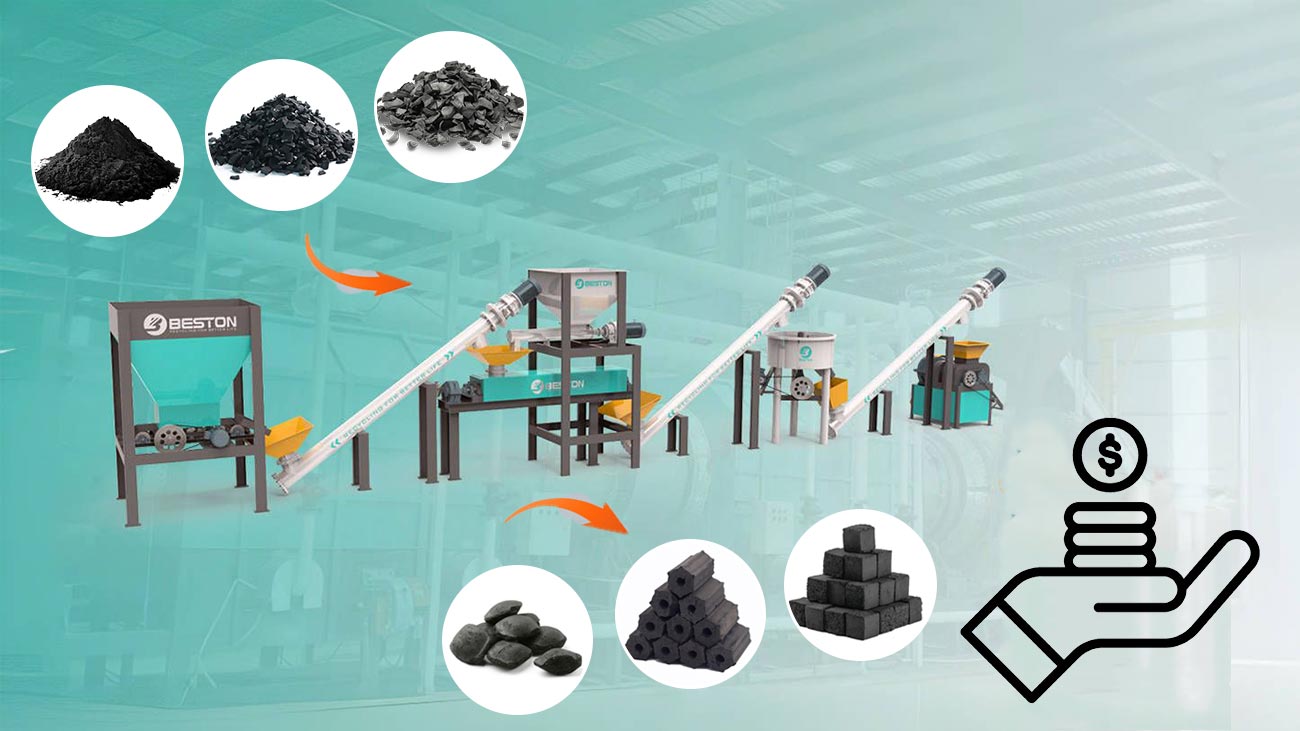
Coconut Shell Briquette Manufacturing Guide
Coconut shell charcoal briquette production has become one of the most promising businesses in renewable energy. With the rising global demand for eco-friendly fuels, entrepreneurs and communities are beginning to explore how to transform coconut shells into a sustainable energy source. This article provides a comprehensive Coconut shell briquette manufacturing guide to help you understand the process, benefits, and opportunities in this growing industry.
Why Coconut Shells?
Coconuts are abundant in many tropical countries, particularly in Southeast Asia, South America, and parts of Africa. After the coconut meat and water are used for food and beverages, the shells are often discarded as waste. However, these shells have a high calorific value, making them an excellent raw material for producing high-quality charcoal briquettes.
Compared to wood or coal, coconut shell briquettes burn longer, emit less smoke, and release minimal harmful gases. This makes them a cleaner alternative for cooking, heating, and even industrial energy needs.
Step-by-Step Manufacturing Process
Following the Coconut shell briquette manufacturing guide, the production process can be divided into several important stages:
1. Collection and Preparation of Raw Materials
The first step is to gather coconut shells. They must be cleaned and dried to remove moisture, dirt, or leftover husk fibers. A dry shell ensures better combustion efficiency during carbonization.
2. Carbonization
The dried coconut shells are then placed in a carbonization furnace or kiln. This process converts the shells into charcoal through slow burning in a low-oxygen environment. Proper carbonization is critical because it determines the briquette’s quality, ash content, and burning time.
3. Crushing and Grinding
Once carbonized, the shells are crushed into fine powder using a hammer mill or crusher. The finer the powder, the stronger and denser the final briquette will be.
4. Mixing with Binder
Since charcoal powder cannot stick together on its own, a natural binder such as starch, cassava flour, or molasses is added. Water is mixed in to create a consistent paste that can be shaped easily.
5. Briquetting
The mixture is then compressed into specific shapes—commonly cubes, hexagons, or cylinders—using a briquette machine. The shape depends on market demand; for example, hexagonal briquettes are popular for barbecue markets due to their airflow efficiency.
6. Drying
Freshly molded briquettes contain moisture and need to be dried either under the sun or in a drying oven. Proper drying ensures the briquettes are hard, durable, and ready for packaging.
7. Packaging and Distribution
Finally, the finished briquettes are packed in moisture-proof bags or cartons for storage and export. Attractive packaging not only protects the product but also improves its marketability.
Advantages of Coconut Shell Charcoal Briquettes
- Eco-Friendly Fuel – They reduce reliance on fossil fuels and decrease deforestation caused by wood charcoal.
- High Energy Value – Coconut shell briquettes burn longer and hotter compared to traditional fuels.
- Low Smoke and Odor – Ideal for indoor and outdoor cooking without health risks.
- Global Market Demand – Popular in countries like Japan, Korea, Middle East, and Europe for both household and industrial use.
Business Opportunities
With increasing awareness of climate change and the push for renewable energy, coconut shell briquette manufacturing is a profitable and sustainable venture. Export markets are particularly lucrative, as buyers seek consistent suppliers of premium-grade briquettes. Small-scale producers can start locally and expand into global markets with the right certifications, such as ISO or SGS testing.
Moreover, governments and NGOs often support such eco-friendly industries by providing training, financial incentives, or export assistance.
Challenges to Consider
Like any business, briquette production comes with challenges. Raw material supply must be consistent, production quality must meet export standards, and packaging must appeal to international buyers. Additionally, competition is growing as more players enter the market. However, innovation, branding, and maintaining quality can set you apart.
Conclusion
The Coconut shell briquette manufacturing guide shows how an abundant agricultural by-product can be transformed into a valuable, eco-friendly energy solution. With proper knowledge, investment, and commitment to quality, this business can generate significant income while contributing to environmental sustainability.
Coconut shell charcoal briquette production is not only a practical solution for renewable energy but also a gateway for entrepreneurs to tap into the growing global demand for green alternatives.